This Website is not fully compatible with Internet Explorer.
For a more complete and secure browsing experience please consider using Microsoft Edge, Firefox, or Chrome

Beyond the "Six Elements Per Wavelength" Rule in Acoustic Analysis

Beyond the "Six Elements Per Wavelength" Rule in Acoustic Analysis

F​ree Webinar

Friday, 17 April 2026 | Online

14:00 (Bengaluru)
09:30 (Berlin) | 08:30 (London)

P​art of the प्रवाह -Pravaha - NAFEMS India Webinar Series
E​xploring Frontiers in Engineering Modelling & Simulation

In the field of acoustic simulation, the "six elements per wavelength" rule has long been cited as the gold standard for achieving mesh convergence. However, applying this guideline in practice often reveals a lack of clarity regarding which wavelength should be considered - particularly when conducting complex structural-acoustic analyses.

This webinar explores the nuances of mesh density and its direct impact on simulation accuracy. We will address the common misconception that this rule is a universal solution, specifically highlighting why the use of linear elements often fails to produce convergence at the six-element threshold.

Key discussion points include:

  • Identifying the critical wavelengths in both fluid and structural domains.
  • A comparative look at how element order dictates the required mesh density for reliable results.
  • Determining when the "six-element rule" is valid and how many elements are truly necessary when it isn’t.
  • Illustrated examples demonstrating the performance of higher-order elements in diverse acoustic environments.

Agenda

  • W​elcome & Introductions
    J​o Potts, NAFEMS
  • U​pdate on NAFEMS India
    NAFEMS India Chair - Uma Maheshwar | BEC - GE Aerospace
    NAFEMS India Chair Elect - Jaya Raju Namala | Airbus Group India Private Ltd. 
  • Beyond the "Six Elements Per Wavelength" Rule in Acoustic Analysis
    Professor Chandramouli P, IITM
  • Q​&A

Details

Event Type Webinar
Event Date 17 Apr 2026
14:00 (Bengaluru) 09:30 (Berlin) | 08:30 (London)

O​ur Speaker

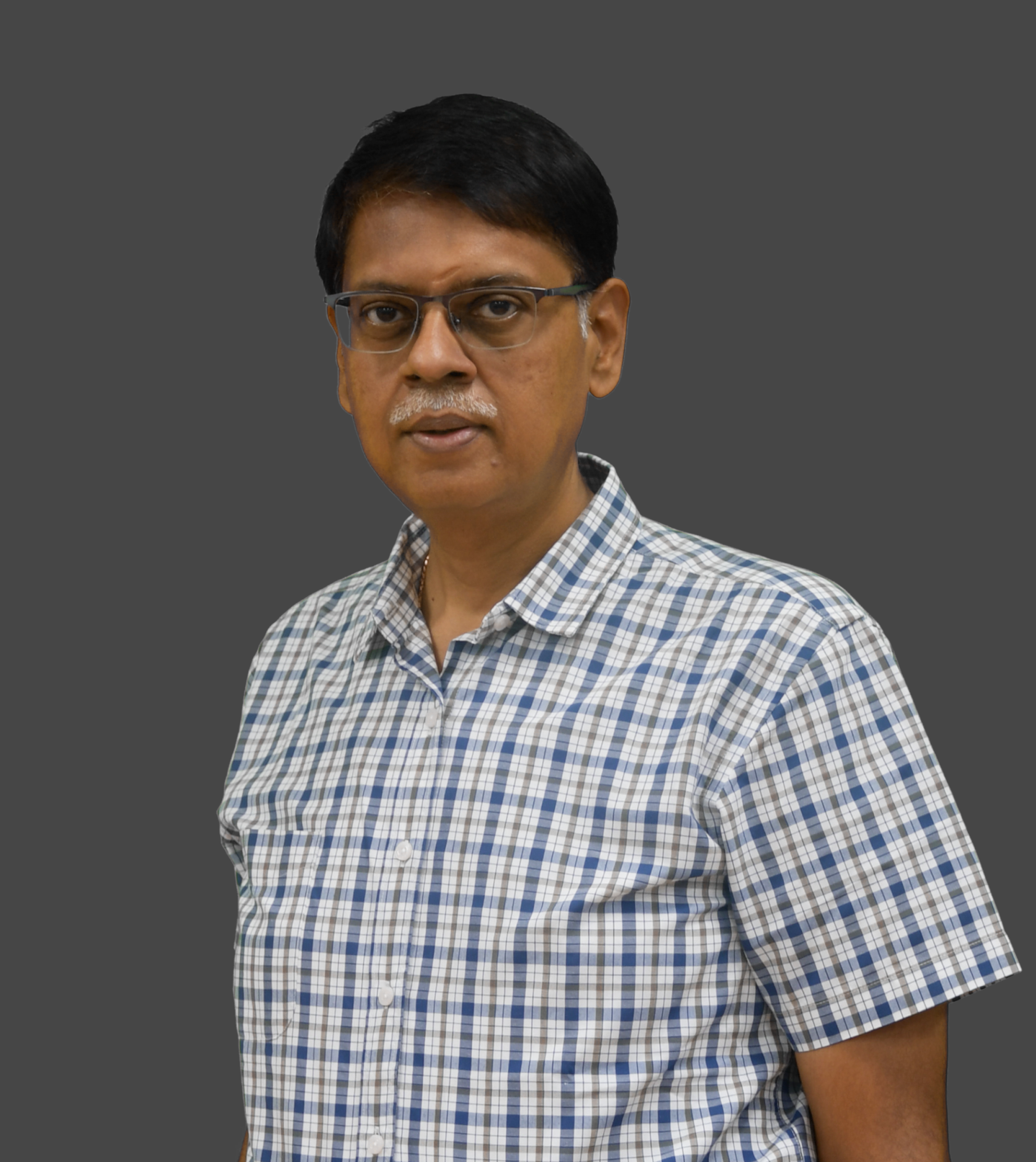
Professor Chandramouli P, Department of Mechanical Engineering at Indian Institute of Technology Madras

Prof. Chandramouli earned his Ph. D. from The Ohio State University, USA, in 1994. After a stint in the industry with Copeland Corporation (now Emerson Climate Technologies) in the US, he returned to IIT Madras as a faculty in 1997.

His primary research interests are in the areas of Musical Acoustics, Meta-Materials for Vibration & Noise Control, Non-linear and Multi-body Dynamics.