This Website is not fully compatible with Internet Explorer.
For a more complete and secure browsing experience please consider using Microsoft Edge, Firefox, or Chrome
The 2026 NAFEMS Americas Conference will feature a dedicated programme of Training & Workshops, giving simulation engineers the chance to sharpen their skills, explore new methods, and gain practical, hands-on insights from industry experts.
On-Site Training with Tony Abbey
Tony Abbey will deliver a two-day training program, comprising three focused 90-minute sessions covering Nonlinear Analysis, Dynamic Analysis, and Fatigue and Fracture Mechanics. Based on selected extracts from his popular NAFEMS e-Learning courses, the sessions emphasize practical engineering judgment, modeling assumptions, and method selection rather than detailed mathematical derivations. Together, they provide a coherent framework for deciding when advanced analysis methods are required, understanding their underlying assumptions and limitations, and applying them effectively in real engineering workflows. Each session is supported by a concise reference sheet summarizing key concepts and guidance for later use.
Dynamic Analysis
Many engineering structures are subjected to time-varying loads. Understanding their dynamic response requires more than static assumptions and depends on how mass, stiffness, and damping interact.
This 90-minute session is based on selected extracts from the NAFEMS Dynamic Analysis e-Learning course and focuses on practical modeling decisions rather than detailed mathematical derivations.
The session begins with the background to Normal Modes Analysis, using simple examples to link fundamental theory to observable structural behavior. The importance of normal modes as the foundation for all other dynamic analysis methods is emphasized.
Modal Effective Mass is a vital tool in carrying out a Modal Survey. An overview of the background and practical application is presented.
Key practical considerations in Dynamic Analysis are covered, including:
Selection of frequency range
Mesh fidelity requirements
Boundary condition accuracy
Efficient workflows are presented to support dynamic model setup, including:
Estimating appropriate time step size and analysis duration for Transient Analyses
Selecting frequency resolution and range for Frequency Response Analyses
These approaches help reduce trial and error in dynamic analysis setup.
The objective of this session is to give engineers a clear framework for:
Understanding the role of modal behavior in dynamic response
Selecting appropriate dynamic analysis methods
Setting up efficient and reliable dynamic FEA models
A reference sheet will be provided as a takeaway, summarizing key concepts, assumptions, and practical modeling guidance for later use.
Fatigue and Fracture Mechanics
Fatigue is one of the most common causes of structural failure and is strongly influenced by both loading history and material behavior. Analytical methods must be used with a clear understanding of their assumptions and limitations.
This 90-minute session is based on selected extracts from the NAFEMS Fatigue and Fracture Mechanics e-Learning course and focuses on practical application rather than detailed derivations.
The session begins with a brief review of the fundamentals of fatigue analysis and its relationship to experimental test data.
Key aspects influencing fatigue life are reviewed, including:
Similitude between test coupons and real components
Non-zero mean stress effects
Stress concentrations and notch geometry
The importance of surface finish and other real-world effects is emphasized as an overlay to purely analytical calculations.
The limitation of High Cycle Fatigue (HCF) assumptions in the presence of plastic strain is discussed, leading to the need for strain-based methods. An introduction to Low Cycle Fatigue (LCF) is provided, outlining when and why this approach is required.
A brief overview of Fracture Mechanics is then presented, focusing on crack growth concepts and their role in structural integrity assessment.
The objective of this session is to give engineers a clear framework for:
Understanding when to apply HCF, LCF, or Fracture Mechanics
Recognizing the limitations of fatigue methods based on underlying assumptions
Placing each method within a broader fatigue and damage tolerance strategy
A reference sheet will be provided as a takeaway, summarizing key concepts, assumptions, and practical modeling guidance for later use.
Nonlinear Analysis
Many engineering problems are inherently nonlinear. The response of a structure cannot always be assessed using linear assumptions. Nonlinear behavior can take many forms and can be confusing to engineers encountering it for the first time. The key engineering challenge is deciding:
Whether a nonlinear analysis is required
What type of nonlinearity is relevant
How much nonlinearity is necessary to capture the correct behavior
This 90-minute session is based on selected extracts from the popular NAFEMS Nonlinear Analysis e-Learning course and focuses on practical decision-making rather than detailed theory.
The session introduces nonlinear analysis by breaking it into the main categories:
Geometric nonlinearity – large displacements, large rotations, instability
Material nonlinearity – nonlinear stress–strain behavior, plasticity
Buckling is also discussed, including the limitations of linear eigenvalue buckling and the role of fully nonlinear methods.
An overview of nonlinear solution procedures is given, covering:
Incremental loading
Iteration and convergence
Common causes of non-convergence and modelling errors
The objective of this session is to give engineers a clear framework for:
Recognizing when nonlinear effects are important
Selecting an appropriate level of modelling complexity
Setting up practical nonlinear FEA models with confidence
A reference sheet will be provided as a takeaway, summarizing key concepts and modelling guidance for later use.
Bio
We are very pleased to announce that Tony Abbey will be at the Conference in person. Tony Abbey has created and taught a wealth of FEA training material over the past 20 years. Thousands of engineers across the world have benefited from his live and e-learning based classes. He has developed a reputation for providing the student with an experience that is full of insight gained from his extensive experience, but which also challenges and motivates.Tony has been working with FEA for nearly 40 years, both in Industry and for leading FEA software providers in the UK and the US.
His informal and interactive presentation style allows the key concepts to be taught in a manner which involves participants fully in the course material. Tony presents papers at NAFEMS and other conferences on a regular basis and has been involved with NAFEMS since its formation.
On-Site Training with Sean Teller
Testing and Modeling of Polymers for Solid Mechanics Simulations
Modern solid mechanics FE codes have built-in, advanced material models that can capture the complex behavior of polymers, including rate-dependent yield, plasticity, creep, stress-relaxation, and anisotropy. Designing your part without taking these into account can lead to extra iterations in the design cycle, field failures, or overdesign, resulting in greater financial manufacturing costs. Using advanced, modern test methods can enable simulation and test engineers to capture all these complex material effects, but measuring the mechanical behavior is the first step. Using your data to select and calibrate a material model will enable engineers to predict potential failures earlier in the design. In this shortened version of the NAFEMS course, I will introduce advanced polymer test methods and material models that can be used to simulate the time-dependent response of all classes of polymers - elastomers, thermoplastics and thermosets, composites, TPE/TPU/TPVs, and biomaterials.
Bio:
Dr. Sean Teller is a Partner at Veryst Engineering. Dr. Teller has extensive experience in mechanical engineering, with specific focus in the mechanical behavior of materials at low and high strain rates, including viscoelasticity, viscoplasticity, nonlinear materials, and fracture mechanics. His work has spanned many disciplines, including polymer characterization and failure analysis, tissue engineering, biomaterials, equipment design, aerospace applications, and semiconductor manufacturing. His interests include designing, performing, and interpreting experimental data to characterize materials and industrial processes over wide ranges of conditions to accurately understand their operation, performance, and failure. His experience includes polymer characterization, experimental methods, building and designing equipment and test fixtures, stress simulations, analyzing equipment performance, machine design and performance, failure analysis, hydrogels, animal dissections, sample preservation, clean room use, and composite materials. EDUCATION Ph.D., Engineering: Solid Mechanics, Brown University, 2012 M.S., Mechanical and Aerospace Engineering, Syracuse University, 2007 B.S., Mechanical Engineering, Syracuse University, 2006 Tau Beta Pi, Pi Tau Sigma

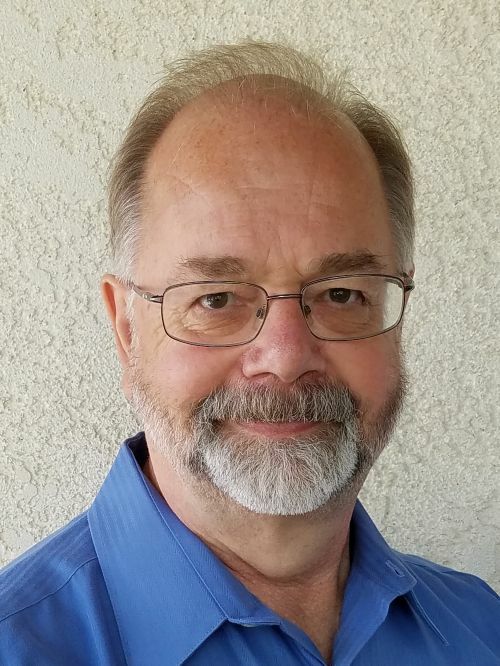 Tony Abbey will deliver a two-day training program, comprising three focused 90-minute sessions covering Nonlinear Analysis, Dynamic Analysis, and Fatigue and Fracture Mechanics. Based on selected extracts from his popular NAFEMS e-Learning courses, the sessions emphasize practical engineering judgment, modeling assumptions, and method selection rather than detailed mathematical derivations. Together, they provide a coherent framework for deciding when advanced analysis methods are required, understanding their underlying assumptions and limitations, and applying them effectively in real engineering workflows. Each session is supported by a concise reference sheet summarizing key concepts and guidance for later use.