This Website is not fully compatible with Internet Explorer.
For a more complete and secure browsing experience please consider using Microsoft Edge, Firefox, or Chrome
Integrated modelling of next gen battery packs at Rimac Technology
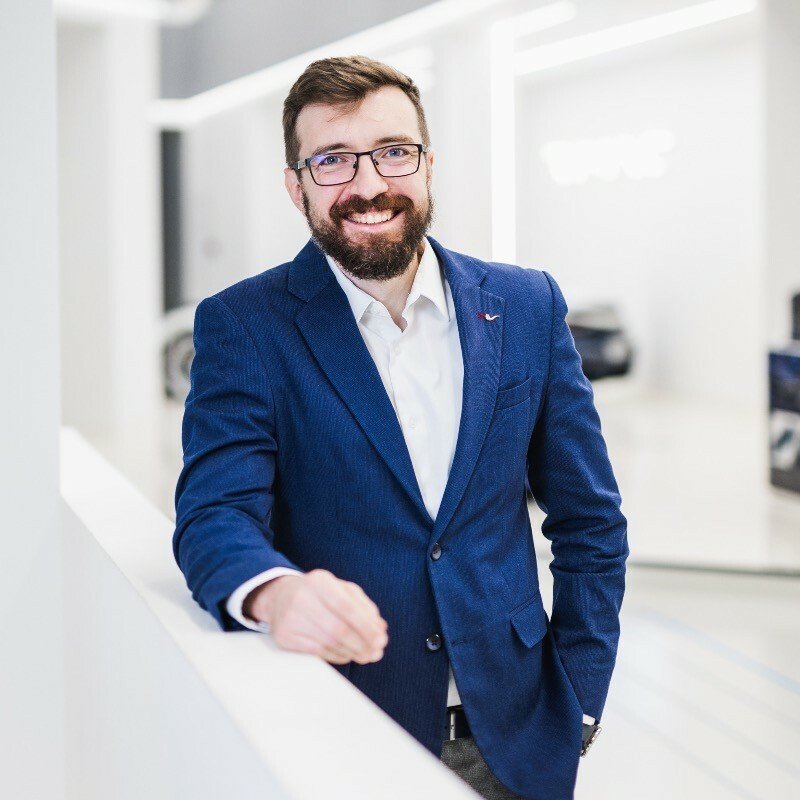
Ivan Krajinović, PhD Director of Central Engineering at Rimac Technology
Rimac Technology is at the forefront of designing and building advanced electric vehicle components for global OEMs, including battery systems, e-axles, control electronics, and software. In this talk, Ivan Krajinović will delve into how an integrated modelling approach, from initial requirements to comprehensive feedback loops from testing, with models in the middle which drives the development of next-generation battery packs at Rimac Technology.
The presentation will highlight the team's position as a vertically integrated, cross-functional department of Rimac Technology, encompassing both modelling and testing capabilities under one roof. Additionally, it will explore the close integration with other development aspects, such as Verification and Validation (V&V) and the manufacturing of high-volume products. While the primary focus will be on next-generation battery packs, the discussion will also touch upon the development of powertrain components.
AI - a threat or an opportunity for scientists and engineers
Prof. Wacław Kuś Associate Professor at the Silesian University of Technology
AI has been a constant presence in the headlines for several years now, with daily articles detailing how many people will lose their jobs and which professions are at risk from AI development. What exactly are AI methods, what opportunities do they offer, and how can they support the work of engineers and scientists?
This lecture will attempt to answer these questions, discussing it from the theoretical perspective to the practical guidance. AI methods developed over 70 years are present in many tools used daily, but the widespread availability of LLM-based models (ChatGPT, DeepSeek, LLAMA, Gemini) has both fascinated and frightened humanity. The limitations of AI methods and the ideas for their application in engineering practice will be presented during lecture. The role of scientists and engineers, in collaboration with AI methods, creates new areas that simplify the design and computational processes. It might seem that the use of AI methods would reduce the demand for engineers, while it actually allows for the creation of better products from an companies perspective. It requires engineers to familiarize themselves with new methods, ways of using and verifying AI-based results, and even the employment of AI specialists.
In the presentation we introduce tools related to global optimization methods, machine learning, neural networks, large language models, and data-driven modeling. Then we discuss recent papers on the application of AI in the design and monitoring of structures and materials. Using AI will enable a similar shift in tools as replacing a slide rule (every engineer in 70s last century used one) with a calculator. The most important aspect of this shift is the fundamental engineering knowledge that allows for the assessment of the correctness of results regardless of the tool used. The ability to spot AI hallucinations and errors is an engineer most valuable skill nowadays.
Modelling the influence of defects on fatigue: Defect Tolerance Approach from Non-Destructive Testing
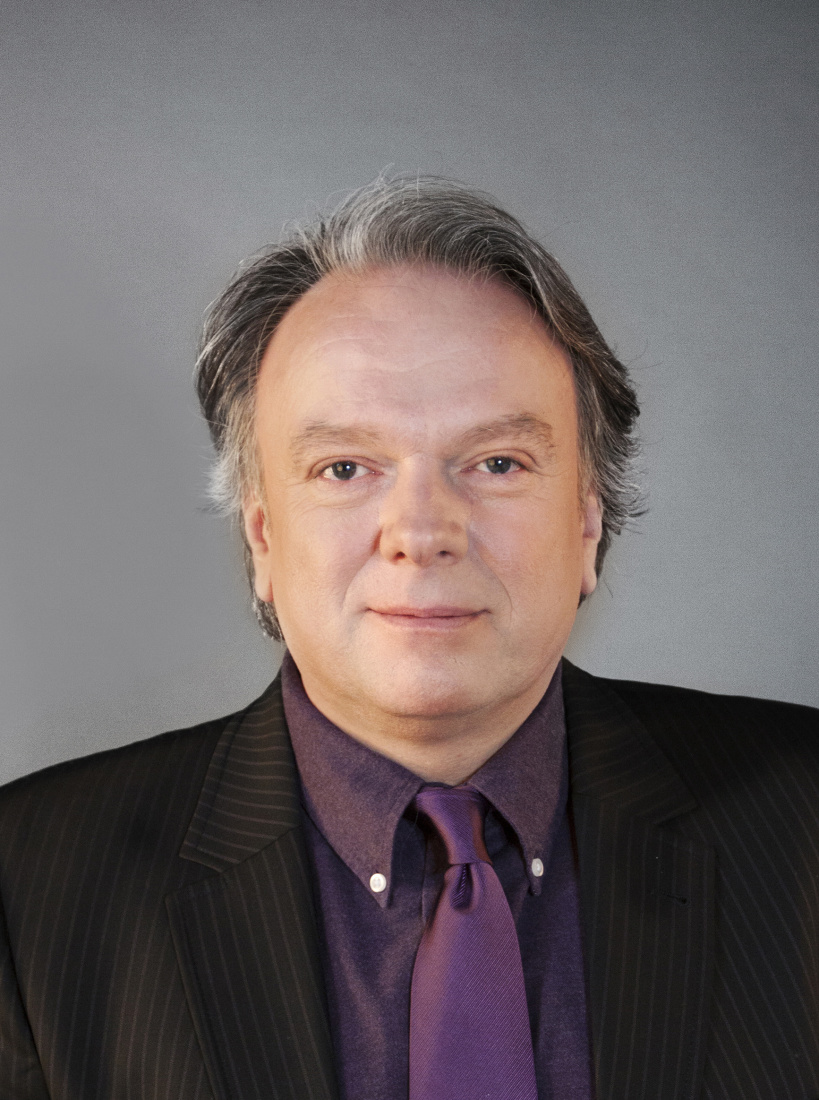
Prof. Yves Nadot, Prof. Carole Nadot Institut P’, CNRS, ISAE-ENSMA, Université de Poitiers France
The aim of this presentation is to discuss the link between Non-Destructive Technics and the fatigue limit for metallic materials. Each NDT have its own limitation. We would like ideally to know size, location, type and morphology of the defect behind the indication. The idea is here to understand how it is possible to enrich uncertain information from NDT with modelling based on a large experimental database.
The importance of human spaceflight – a scientific perspective
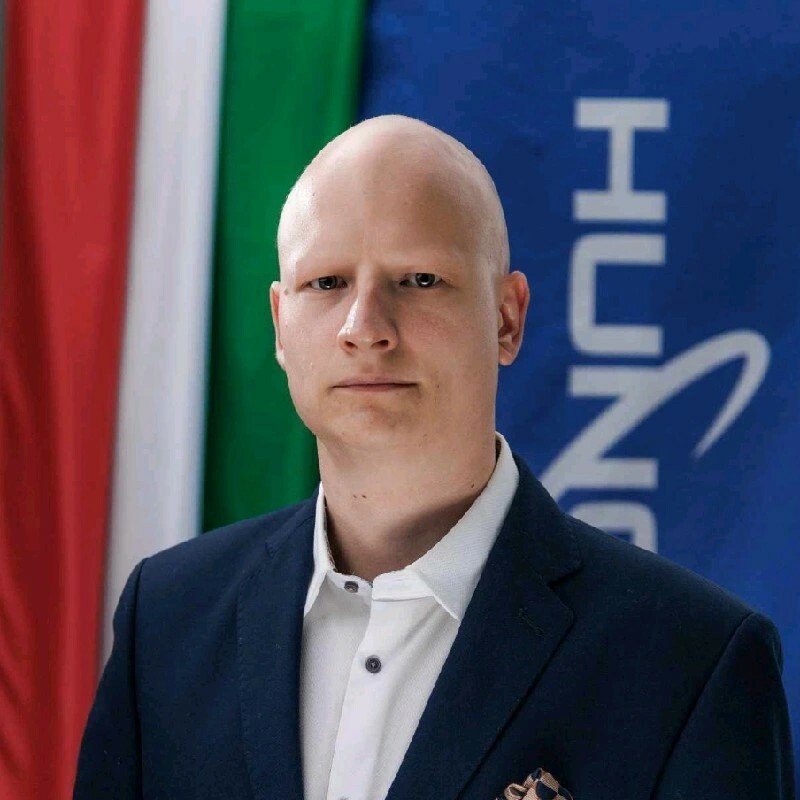
István Örökös-Tóth
Lead Engineer, HUNOR
The space sector is booming with opportunities, as its availability has increased significantly over the past few years. Private astronaut missions, originally aimed at space tourism, have become an opportunity for accelerated growth in space sciences. This session will explore the role of HUNOR – Hungarian to Orbit and provide insights into the science behind the experiments.
Multiphysics Insights into Military Device Performance and Reliability
Marcin Lisiecki M.Sc. Eng.
Cyber Command Poland
Modern military devices operate under complex electrical, thermal, and mechanical loads that strongly affect their performance and reliability. This presentation focuses on simulation-based electro-thermo-mechanical analysis to investigate the coupled multiphysics behavior of such systems. Numerical models are used to capture the interactions between electrical loading, heat generation, and mechanically induced stresses under representative operating conditions. The simulation results enable the identification of critical stress locations and dominant failure mechanisms, providing valuable insight for reliability assessment and design optimization of mission-critical military devices.
Accuracy and Reliability of Electro-Vibro-Acoustic Simulations for the Development of Automotive Audio Systems
Dr. Alfred Svobodnik
MVOID Group
The advancement of digitalization has significantly transformed the traditional product development paradigm. This transformation is characterized by a shift toward simulation-driven and frontloaded methodologies, where the integration of sophisticated engineering analysis techniques occurs much earlier in the development cycle. By implementing advanced engineering analysis techniques in the initial phases, organizations can substantially enhance engineering efficiency. This proactive approach allows for the optimization of product performance from the outset, minimizing costly revisions later in the process. Engineers in various industries now have the capability to conduct virtual assessments of product quality. Utilizing digital prototypes during the early stages of development enables teams to identify and address potential issues, leading to significant improvements in product design and functionality before physical manufacturing begins.
Multiphysical CAE engineering has made loudspeaker and car interior acoustic simulations possible for nearly 20 years. Today, the industry widely uses realistic models of automotive audio systems and their environments.
While these simulations have reached high levels of sophistication—often achieving accuracy within a few percent of experimental measurements at low to mid-frequencies—their reliability is heavily dependent on the accurate modeling of damping, material properties, and coupled electromagnetic-structural-acoustic interactions. Accuracy is high at low frequencies but generally decreases at high frequencies due to the increased complexity of structural modes and the sensitivity to small, unmodeled, or unknown geometrical/material variations.
This presentation will discuss the general prediction accuracy of acoustic analyses, the model accuracy for the concept and pre-development phase, and the simulation reliability for the design & development phase (Digital Twin). Eventually, accuracy and reliability of auralizations will be addressed as well.