This Website is not fully compatible with Internet Explorer.
For a more complete and secure browsing experience please consider using Microsoft Edge, Firefox, or Chrome
From Newton-Raphson to Neural Networks: Confessions of a Geometric Deep Learning Novice
From Newton-Raphson to Neural Networks:
Confessions of a Geometric Deep Learning Novice
3-minute read
Ian Symington - March 11th 2026
In recent years, the integration of Artificial Intelligence into engineering workflows has emerged as a primary area of interest for simulation professionals. Of particular note is the rise of Geometric Deep Learning (GDL), an approach that can be used to develop fast-running data-driven models that consider the shape and structure of a component.
While standard Deep Learning has made a huge contribution to fields like image recognition and natural language processing, it traditionally struggles with the complexities of 3D engineering data. This is where the "Geometric" aspect of GDL comes into play.Traditional AI is designed for data that sits on a flat, structured grid (think of the pixels in a 2D photograph). However, engineering problems are rarely flat. Our daily work involves interacting with complex CAD surfaces and unstructured meshes.
Geometric Deep Learning provides a framework to incorporate the shape of our parts directly into the machine learning process. By integrating CAD files or simulation meshes directly into the ML process, GDL allows the model to "understand" the topology of a design. For the simulation engineer, this means that once we have a trained GDL model it can attempt to predict the performance of a similar design in seconds, mitigating the computationally expensive solving process associated with traditional physics-based simulation.
Over the last 6 months I’ve been involved in a study looking at GDL tools through the eyes of a simulation engineer familiar with physics-based modelling and simulation. The study selected a fundamental mechanical engineering problem—a plate with a hole under uniaxial tension (See Figure 1). Using a case with a well-established analytical solution allows us to isolate the GDL model's performance and understand its behaviour without the interference of geometric complexity.
Figure 1: Benchmark description
The work was carried out using Siemens Simcenter PhysicsAI [2]. NAFEMS and I would like to extend a massive thank-you to Siemens, and specifically to Azan Parmar, who spent a significant amount of time patiently explaining concepts to me that would have been obvious to a data scientist. Please note that while Siemens provided the necessary software tools and technical support, this research remains independent and is not a sponsored or commercial endorsement. That data used to train the GDL model is available to NAFEMS members [3] and we are actively working with other leading CAE vendors to understand how their GDL toolkits address this problem.
The goal of the GDL models that were created was to predict the principal stress distribution in the plate and, in particular, to attempt to capture the stress concentration that is found at the edge of the hole. The problem variables include applied load, plate thickness, and geometric variables including:
hole diameter
hole position
plate extent
As with any engineering simulation study, the best approach is to start simple and build complexity block by block.To this end, 6 datasets, described in Table 2 have been created, in which different combinations of the parameters are varied. A separate GDL model has been trained using the samples in the different datasets.
The Experience
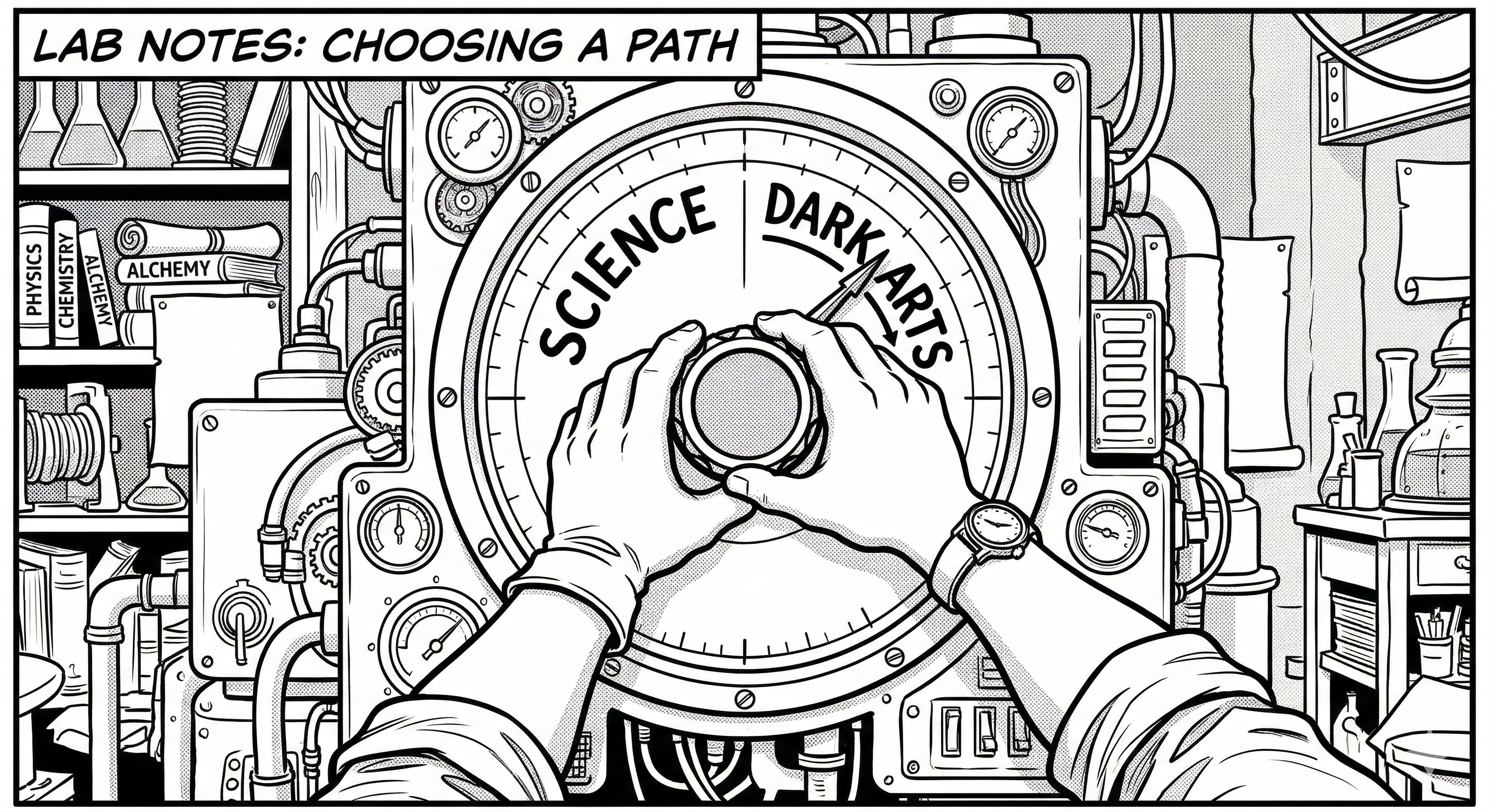
Engineering simulation has always been a mix of hard science and the "Dark Arts". Most of the NAFEMS membership have spent years developing a "feel" for which parameters to tweak to get a stubborn solver to behave. Moving into Geometric Deep Learning doesn't change that; it just shifts the direction of the art. Instead of obsessing over contact stabilization or turbulence models, you’re now obsessing over Learning Rates and Latin Hypercube Sampling.
My feeling is that if you have the skills to run a complex physics-based simulation, you already have the DNA necessary to build GDL models using tools like PhysicsAI. We are already trained to look for convergence, to hunt down outliers, and to worry about mesh sensitivity. Developing a data-driven model feels remarkably similar; it’s just a new set of knobs to turn
You can read the full details of how the GDL models I created during the study performed in the full article here, but in brief, here are my main takeaways.
The sport of watching a convergence graph is alive and well! - Watching a loss curve drop feels exactly like watching residuals converge in a Newton-Raphson analysis. If the math is working, you feel it in your bones.
GDL needs lots of training data. If you don’t feed it data from a clean, well-sampled design space, it will fail.
Know your limits - These models are brilliant at what they’ve seen, but they are terrible at guessing the unknown. If your training data stops at 119 MPa, don't expect the AI to have a clue what happens at 400 MPa.
Find some support. If this is your first time using GDL, you are going to waste a whole lot of unnecessary time, or worse, fall flat on your face, unless you have someone to hold your hand.
Ian Symington is Chief Technical Officer at NAFEMS, the International Association for the Engineering Modelling, Analysis and Simulation Community, where he leads the organisation’s technical strategy and oversees 18 international technical working groups comprising over 350 global experts. As a chartered engineer and member of the Institute of Mechanical Engineers, Ian has chaired the IMechE’s Simulation and Modelling Conference since 2023. With over 25 years of specialist experience in the engineering simulation industry, he frequently authors strategic guidance on emerging technologies.