Meet the NAFEMS Eastern Europe Student Award Winner:
Adam Hybler - University of West Bohemia
5-minute read
Márton Grόza- December 5th 2025
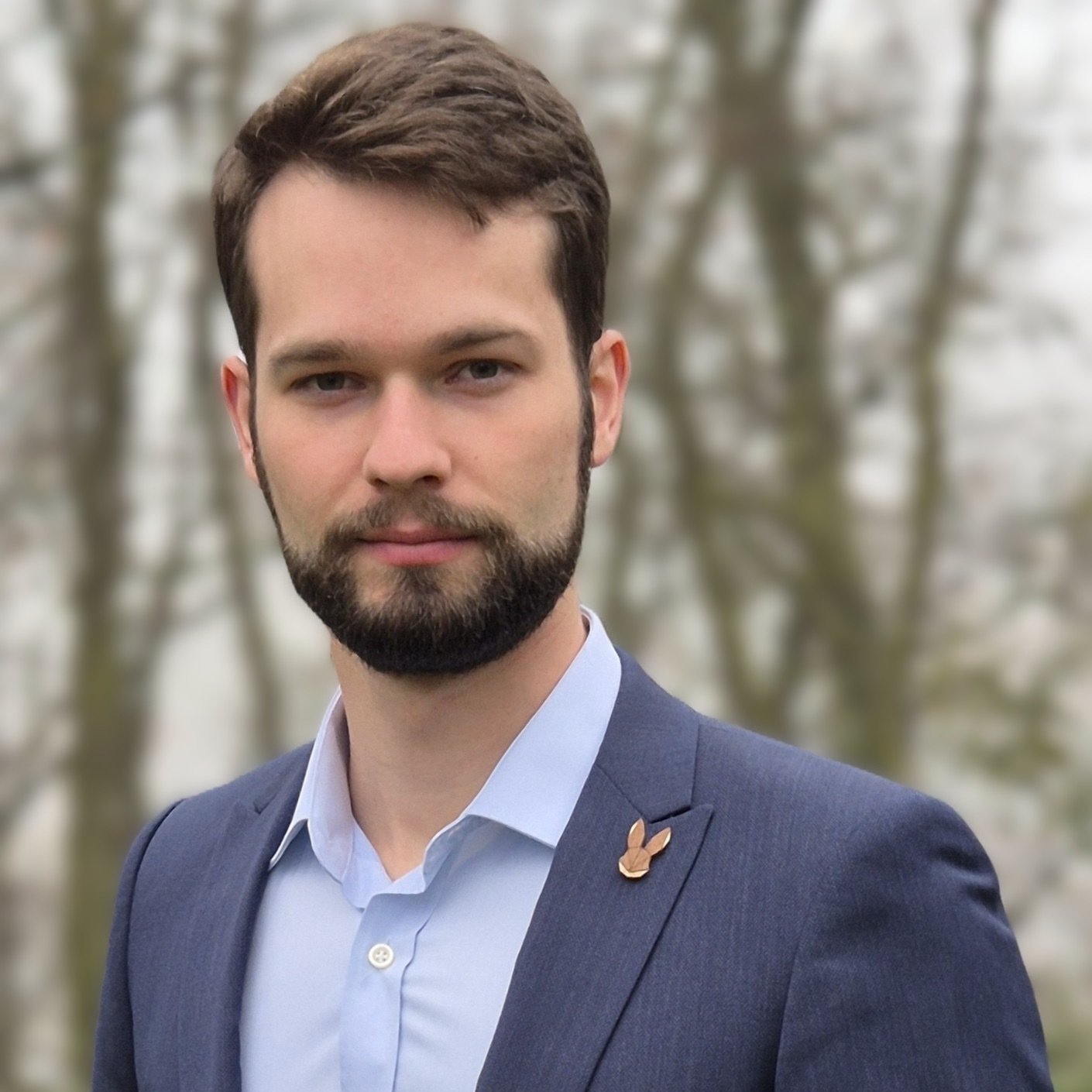 Adam Hybler is the winner of the 2024–2025 NAFEMS Eastern Europe Student Award. He talked to us about his education, his simulation work, and the inspiration behind the project. He discusses his research, his travels, and his recommendations for future students here.
Tell us a bit about yourself.
I’m a CAE engineer from the Czech Republic with a strong background in computer simulation. I studied Applied Mechanics at the Faculty of Applied Sciences at the University of West Bohemia, where I was given the opportunity in my second year to collaborate with COMTES FHT a.s., a private research company specializing in the field of metallic materials. What began as cooperation for my Bachelor’s and later Diploma thesis developed into several additional projects and a part-time position during my studies.
Today, I continue to work with COMTES while also holding a position at IDIADA CZ a.s. This combination gives me exposure to a wide range of engineering challenges, from advanced material research to automotive development, and allows me to grow continuously as an engineer. I enjoy solving complex technical problems, learning new tools and methods, and contributing to projects that have real-world impact.
How did you first get interested in engineering simulation?
The study program at my university focuses on applied mechanics from day one, with a strong foundation in mathematics and engineering principles. Coming from a general-education background, I explored several possible career paths, but I was most drawn to the combination of mathematics, IT, and physics. Engineering simulation brought all these elements together in a way that felt both logical and creative.
I was especially fascinated by the ability to study and simulate material behavior - an area I was fortunate to work with early on and still genuinely enjoy today.
How would you explain the topic of your thesis to a non-expert in a few sentences?
My thesis focuses on DP1000, a high-strength dual-phase steel that exhibits mild anisotropy, meaning its mechanical response varies with the loading direction. The aim of my work was to predict, using FEM simulations, this directional behavior during a commonly used forming experiment based on a set of simple tensile tests. To achieve this, I implemented and compared two anisotropic material models and evaluated several methodologies for determining the yield point, the transition from elastic to plastic deformation. In addition to established approaches from literature, a supplementary method was developed to try to improve the accuracy of yield-point identification.
Which simulation methods did you use in your thesis?
All simulations in my thesis were performed using FEM in Abaqus. I developed two separate FEM models corresponding to the two anisotropic criteria applied in the study, each using different element types and symmetry conditions. As a result, the simulation outcomes varied depending on both the chosen material model and the yield point determined by the respective identification method.
What was the most surprising or exciting result you found?
I found that the more complex material model, which utilizes a larger set of input data and is theoretically expected to provide higher accuracy, was likely highly sensitive to the quality of the experimental data. As a result, it can produce less reliable predictions than the simpler model which incorporates only part of the dataset.
Did you collaborate with an industrial partner or research group? If yes, how did that influence your work?
Yes. The thesis was carried out in collaboration with COMTES FHT, where I had the opportunity to design and perform all experimental tests using the company’s laboratory equipment. I was also able to utilize their computational resources, both hardware and software, for the simulation work.
What motivated you to submit your thesis to the NAFEMS Eastern Europe Student Award?
A colleague of mine at IDIADA CZ shared the announcement with me and suggested that it could be a valuable opportunity. Since my thesis was already completed, submitting it did not require much additional work, and I felt it was worth trying, both to gain broader feedback and to see how my research would stand in a wider engineering community.
What advice would you give to students who are just starting to use simulation in their projects?
My advice would be to develop a solid understanding of the mathematical and physical principles behind the simulation software you are using. Knowing what each “button” or option actually does can make a huge difference in obtaining reliable and meaningful results, so don’t skip the theory even if the software seems intuitive.
In an ideal scenario, what kind of engineering problems would you like to work on in 5–10 years?
Currently, I work in two different companies (in different industries), which allows me to tackle a variety of engineering challenges from different perspectives. In the next 5–10 years, I hope to maintain this broad overview, as I haven’t yet identified a single area I want to specialize in deeply. I prefer to keep my options open and continue exploring diverse problems that allow me to learn and grow as an engineer.
To explore Adam’s thesis and learn about the other participants, visit the NAFEMS Eastern Europe Student Award page.
Student Award