NAFEMS / AI in engineering simulation
Benchmarks, community, initiatives, events, training and resources on AI and ML for engineering simulation.
On this page
01 / Why AI, why NAFEMS
The interest in artificial intelligence across the engineering simulation community is unprecedented. Every NAFEMS webinar, training course and seminar on AI draws capacity crowds. This is not merely because of industry hype, but because workflows that have remained largely unchanged for decades are undergoing fundamental disruption.
NAFEMS recognised this shift early. In 2021, we established the Engineering Data Science Working Group to help engineers integrate data science with physics-based simulation. Since then, we have expanded our portfolio of dedicated training courses and seminars, launched AIPhysics.org as an open benchmark for AI methods in simulation, and hosted our first international conference on AI and ML in engineering simulation in October 2026.
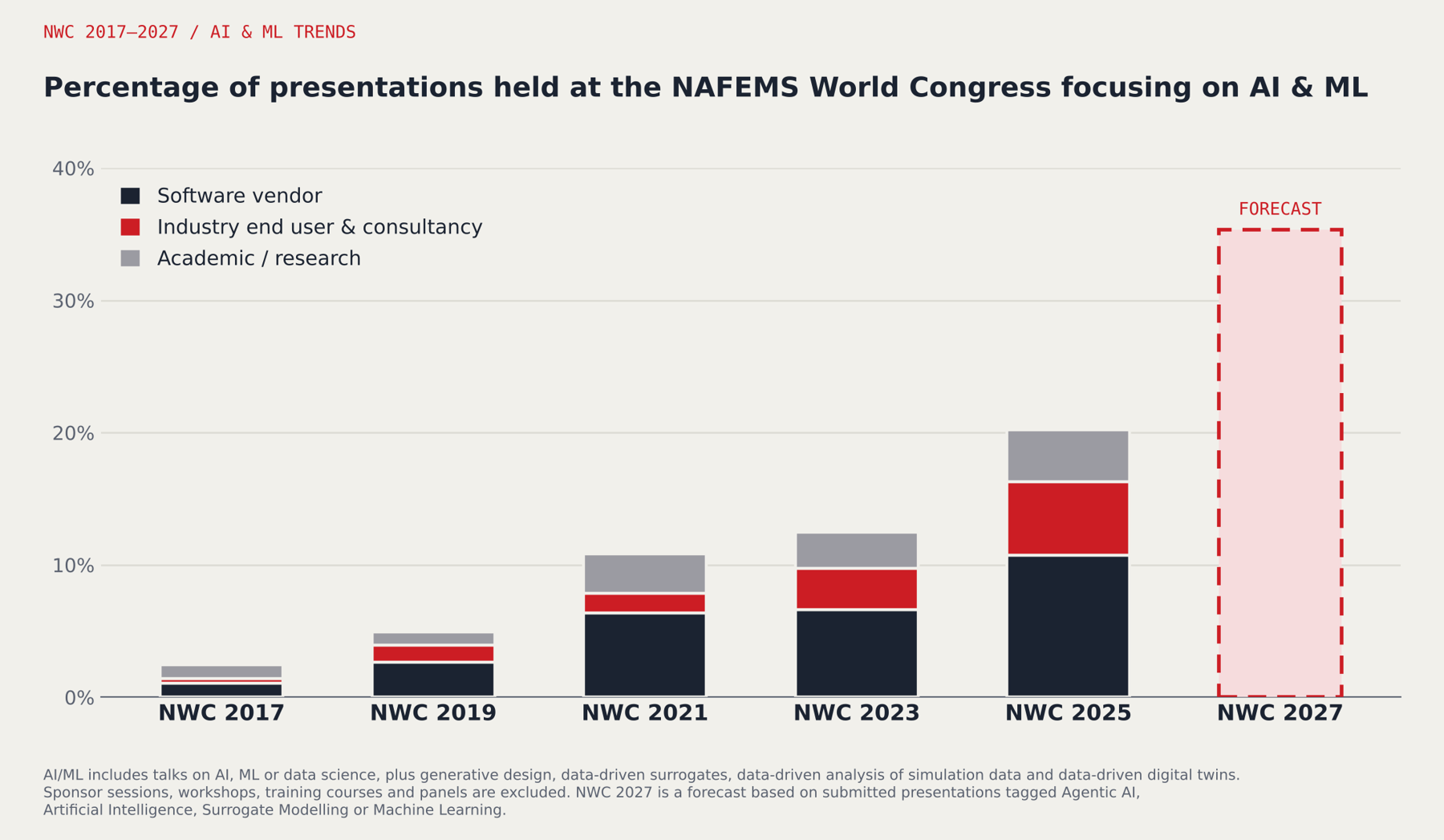
The biennial NAFEMS World Congress reflects just how rapidly this landscape is evolving. AI and ML first started to feature as a significant topic in 2017. By 2025 over 20% of the congress content was strongly featuring this topic. The abstract submission deadline for our 2027 congress has recently closed with 35% of authors selecting an AI / ML tag when submitting their abstract!
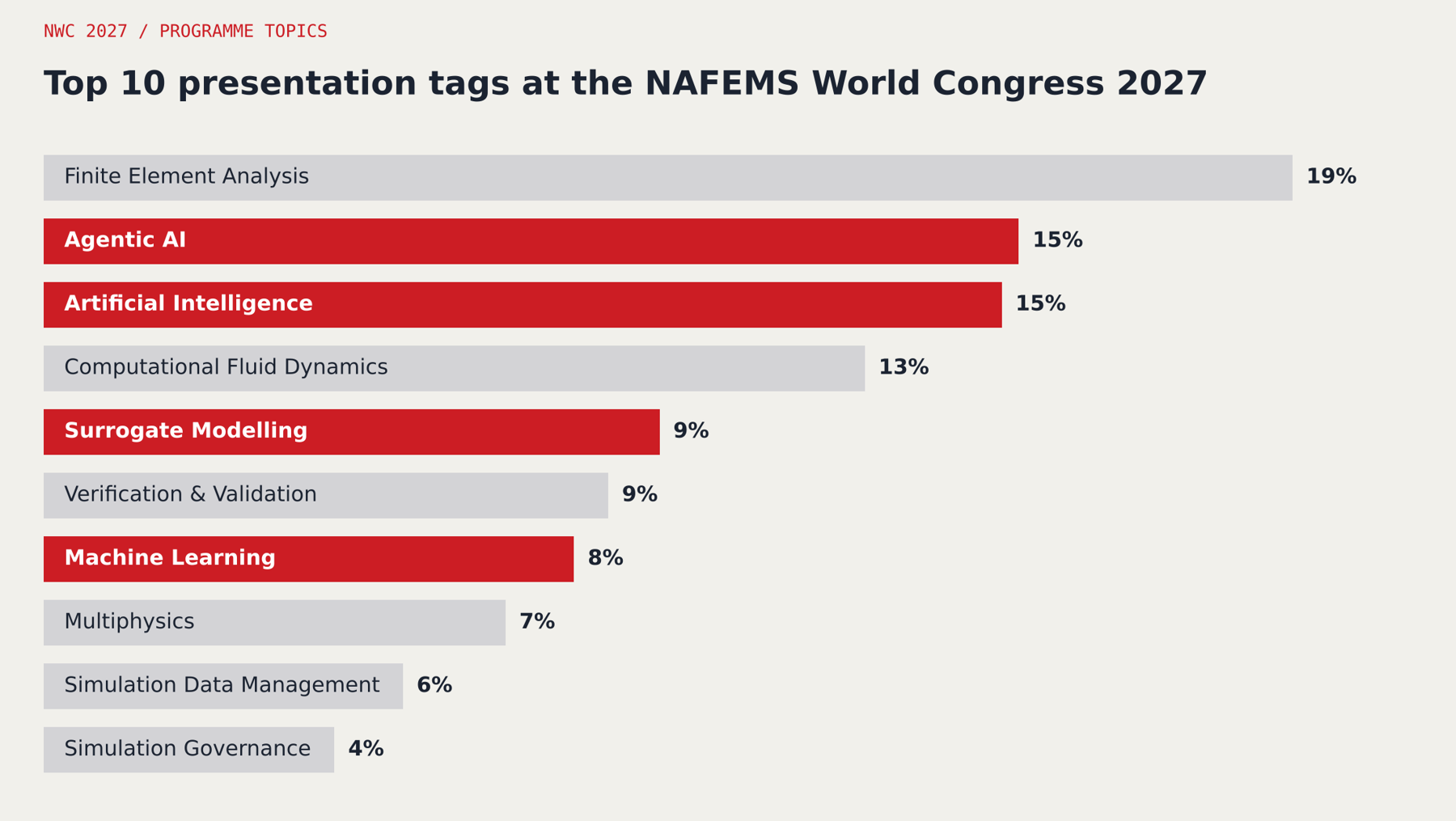
Alongside volume, the focus of AI in simulation has matured. Early adoption centred on surrogate models capable of predicting results in seconds rather than hours, alongside AI-driven knowledge discovery. Today, agentic AI is the second most common tag among NWC27 abstract submissions. Software vendors and industrial end users are actively deploying AI agents to automate entire workflows: defeaturing geometry, meshing complex assemblies, identifying critical time steps in lengthy transient analyses, drafting simulation reports, and archiving results.
Rapid progress brings pressing engineering challenges that demand community consensus:
Trust and validation
How do we establish confidence in “black box” models and rigorously validate data-driven predictions?
Benchmarking
What metrics should govern the performance and reliability of agentic AI workflows?
Data pedigree
What metadata standards are required to capture simulation lineage for safe AI exploitation?
This hub showcases our latest work around AI in simulation. Explore our training courses, webinars, articles, and event recordings, or dive into the initiatives we are leading, from AIPhysics.org to our technical working groups.
Ready to contribute? Join an AI working group and help shape the future of simulation.
Select a chart to open it full size.
02 / Initiatives
Developing trust in data-driven surrogate models
Establishing trust in machine learning for engineering simulation requires rigorous, objective evaluation. Governed by NAFEMS, AIPhysics.org offers free, open-access physics datasets designed specifically to benchmark surrogate models.
To objectively assess performance and identify which ML architectures excel on specific problem classes, blind evaluation data has been withheld from the training sets. Five benchmark problems are live on the site today, with additional datasets rolling out soon.
Visit AIPhysics.org to explore the datasets, test your surrogate models, and help build community confidence in ML-driven modelling.
NAFEMS and Rescale launched AIPhysics.org on 28 October 2026 in Munich.


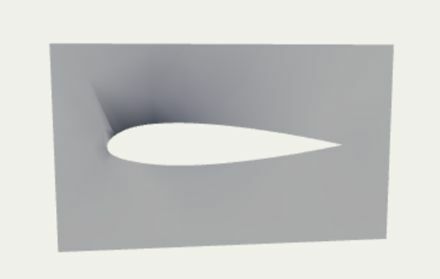
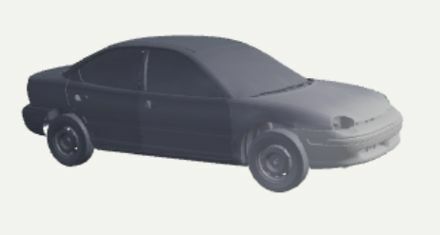
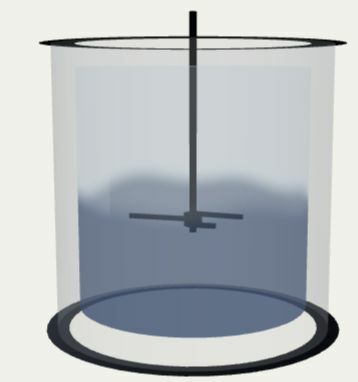
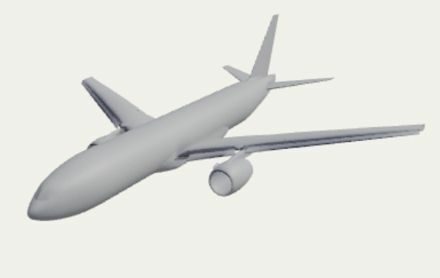
A subset of the benchmark problems live on AIPhysics.org.
03 / Munich AI CAE Conference
The Artificial Intelligence and Machine Learning in CAE Applications Conference was NAFEMS's first dedicated international conference focused on AI and ML in simulation. The event, held on 28 to 29 October 2026 in Munich, sold out, with over 250 attendees from across industry and academia joining two days of presentations, discussions and networking. Thank you to all who joined us to explore the future of AI-driven engineering simulation. If you were not able to join us in Munich, read NAFEMS Technical Officer Márton Gróza's write-up below.
Article · Benchmark
Márton Gróza, NAFEMS Technical Officer
…Readiness for agentic AI is built on process maturity: defined inputs and outputs, acceptance criteria, versioning and traceability.
Several questions remained open. How much can legacy data contribute before curation costs outweigh its value? How broadly can a surrogate generalise? Who maintains an automated agentic workflow when the honeymoon period is over? How can an engineer oversee more analyses without losing the ability to explain them?

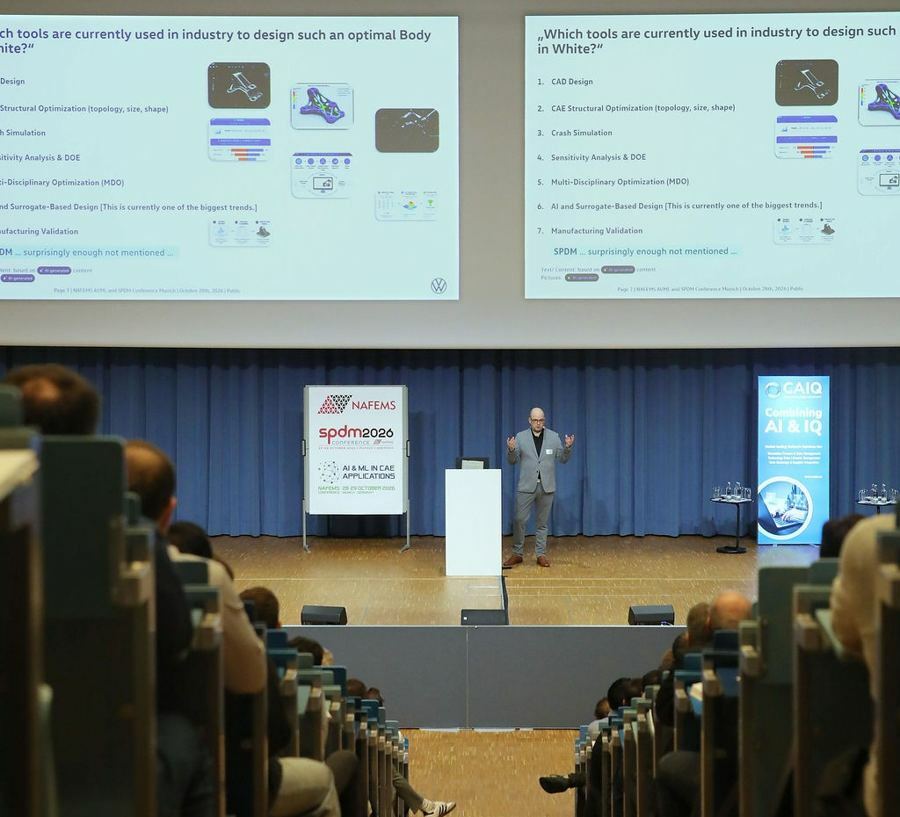
The main hall during a keynote, Munich, October 2026.
04 / AI Technical Working Groups
NAFEMS technical working groups bring together experts from industry and academia, in a vendor-neutral forum to develop guidance and resources for the simulation community.
New
A new group focused on benchmarking agentic AI for engineering simulation. Now inviting experienced contributors.
Established 2021
Data science, machine learning, AI and optimisation for product design.
New, forming now
NAFEMS is establishing the Agentic AI Working Group (AAIWG) to guide the engineering simulation community through this next major shift. Agentic AI refers to intelligent systems capable of autonomously planning, reasoning and executing multi-step workflows to achieve a defined engineering goal. Rather than acting solely as passive assistants or surrogate models, these AI agents can actively interact with simulation software, select appropriate tools, prepare geometry and meshes, execute solver runs, and evaluate results with minimal human intervention.
To move beyond industry hype and provide practical clarity, the AAIWG will focus its initial activities on benchmarking and performance evaluation:
Benchmark challenges
Developing standardised, representative engineering simulation challenges to test and demonstrate the real-world potential of agentic AI.
Evaluation frameworks
Creating clear, objective frameworks that enable the simulation community to measure the accuracy, reliability, efficiency and robustness of these autonomous tools.
Given the rapid momentum in this space, we anticipate high interest in the AAIWG. For this initial phase, we are specifically seeking active contributors from academia, software vendors and industrial end users who have hands-on experience developing or deploying agentic workflows.
Get involved
If you are actively building agentic systems for simulation and want to help establish the industry benchmarks, we invite you to express your interest in joining the working group.
Established 2021
The Engineering Data Science Working Group (EDSWG) is a vendor-neutral, cross-industry, international group of experts. It promotes data science, including machine learning, AI and optimisation, to improve the product design process and to draw insight from data that supports design decisions. The group has just launched a focus team to work out what metadata should be stored with a machine learning surrogate model.
Data lives in geometry
Much of the data sits in 3D geometry and engineering models, not in the tables machine learning methods expect.
Small, costly datasets
Simulation data takes up-front effort to create and extract, so there are often fewer data points than in other fields.
Tools for engineers
Interfaces and coding tools need to suit people from many engineering backgrounds, not only computer scientists.
Many outputs
There are far more quantities to predict than in typical data science problems.
Known physics
Engineers often know the governing laws, which can reduce the data needed and make models more accurate.
Designed experiments
Responses often come from intensive simulations arranged by design of experiments, which can be adaptive for active and incremental learning.
Airbus · Boeing · Caterpillar · Ford · General Electric · Gulfstream Aerospace · John Deere · Key Ward · Ohio State University · Owens Corning Science & Technology · Politecnico di Torino · Rolls-Royce · SimR · Synopsys
Guide · Members
EDSWG · September 2024
An introduction to engineering data science: the workflow, what makes engineering data different, where it adds value across design, manufacturing and operations, and advice on starting out with machine learning.
Benchmark · July 2026
EDSWG · Benchmark magazine
Case studies showing how data science complements physics-based simulation, helping engineers explore design spaces faster and predict with quantified uncertainty, plus highlights from the 2026 Data-Driven Engineering Seminar.
Recording · Members
EDSWG panel · 23 February 2022
A panel discussion led by the Engineering Data Science Working Group on the machine learning methods already used in engineering and those still emerging.
Interactive workshop · Members
Catherine Amodeo (Ford) and Alberto Ciampaglia (Politecnico di Torino) · February 2026
A hands-on workshop, run in a browser-based Google Colab notebook, that turns additive manufacturing process parameters into fatigue life predictions. It compares linear regression, random forests, XGBoost, neural networks and physics-informed models that respect S-N curve behaviour.
Get involved
The group welcomes practitioners from industry and academia who work with simulation, data science or both, including anyone interested in the new surrogate model metadata focus team.
05 / Learn
Live online NAFEMS courses for simulation engineers, from first principles to validating AI models.
Course · 2 days
24 to 25 November 2026 · Online
Covers the theory behind AI, machine learning and deep learning, then has you build your own models, including physics-informed neural networks and surrogates for design optimisation. For simulation engineers with no AI or programming experience.
Course · 1 day
19 November 2026 · Online
Build graph neural network surrogates from FEA and CFD results to predict fields for new geometries almost instantly. For engineers familiar with FEA, CFD and meshing. ML experience helps but is not required.
Course · 1 day
17 November 2026 · Online
Validation metrics, uncertainty quantification and failure-mode diagnosis, so you can judge whether a model you built, inherited or are buying is fit for engineering decisions. No statistics or programming background needed.
06 / Resources
NAFEMS maintains the largest archive of engineering simulation resources in the world, with almost 10,000 resources. Browse a curated selection of our latest webinar recordings and magazine articles focused on AI-driven engineering simulation to see the breadth of technical content available to NAFEMS members.
Coming soon · ASSESS Initiative Strategic Insight Paper
We will shortly be releasing a new paper from our think tank, the ASSESS Initiative, that offers engineering leaders a practical perspective on what it takes to turn the promise of Engineering AI for modelling and simulation into lasting engineering capability. We will update this space as soon as it becomes available.
Webinar · Member playback
20 August 2026 · Gary Fedder, Carnegie Mellon University
A keynote first given at ASSESS. Gary Fedder explains how AI and large language models work, where they fall short in engineering, and how digital twins connect AI to physical systems, with examples from semiconductor manufacturing, robotics and additive manufacturing.
Article
Ian Symington, NAFEMS · 10 March 2026
After twenty years with physics-based solvers, a simulation engineer takes a first look at the geometric deep learning surrogate tools now appearing in vendor platforms, and describes building fast, data-driven models that take account of a component's shape.
Webinar · Member playback
27 July 2026 · Alessandro Faure Ragani (McKinsey) and Marty Smyth (Rescale)
Drawing on McKinsey research into more than 250 engineering simulation companies, this webinar looks at physics foundation models, changing software ecosystems, and the investments and strategic choices shaping the field.
Benchmark · July 2025
Max Kassera, yasAI · NAFEMS tutor
A survey of machine learning in simulation, from surrogate models to turbulence-model corrections and faster FE design optimisation. It explains why everyday industrial use is still limited, citing data and compute costs, trust in opaque models and scarce skills, and expects wider adoption within five to ten years.
Webinar · Member playback
5 February 2025 · Max Kassera, yasAI
An introduction to core AI methods such as neural networks and clustering, how they fit into simulation engineering, and what they can and cannot do in practice, with examples from recent research.
Benchmark · July 2025
Márton Gróza, NAFEMS Technical Officer
A report on the NAFEMS World Congress 2025 panel in Salzburg, where industry and research experts discussed AI and ML for simulation. It concludes that success depends on curated data, expert validation of opaque models, and a focus on practical gains such as faster design cycles.
07 / Events
Explore our upcoming online seminars and webinars on AI in engineering simulation, alongside our archive of past online and in-person seminars and workshops. Missed a session? NAFEMS members have full access to presentation materials from previous events. Select any past event below to view and download the slides.
9 to 10 December 2026
Online seminar with the NAFEMS Optimisation Working Group. Covers AI in pre-processing, design, and materials and manufacturing, including topology optimisation, AI agents in simulation workflows, physics-informed neural networks, and who owns the data and models.
28 January 2027
Free online webinar with Dr David Panni, part of the ASSESS AI and ML theme.
28 to 29 October 2026
NAFEMS's first dedicated international conference on AI and ML in simulation, held in Garching near Munich alongside the SPDM Conference. The event sold out, with over 250 attendees. Read Márton Gróza's reflections on the conference in section 03.
25 to 26 February 2026
Online seminar with the Engineering Data Science Working Group. Day 1 covered ML model deployment, manufacturing data science and generative AI for design. Day 2 covered verifying time-series models, multimodal LLMs for engineering questions, and the digital thread. Slides, recordings and a workshop notebook are available.
10 to 11 December 2025
Online seminar with the Optimisation Working Group, with speakers from Boeing, DLR and others on Bayesian optimisation, active learning, reliability-based design and PINNs. Recordings, presentations and extended abstracts are available.
11 March 2025
One-day workshop in Coventry, run jointly with The Alan Turing Institute. Covered physics-informed machine learning in simulation and generative AI in engineering, with applications from wind energy and additive manufacturing to turbomachinery and aerodynamics. Slides are available.
26 to 27 February 2025
Online seminar with the Engineering Data Science Working Group on data-driven methods already in industrial use and those still emerging, from surrogate models to predictive maintenance. Recordings and slides are available.
20 to 21 November 2024
Two-day seminar in Lund, Sweden, from NAFEMS NORDIC. Focused on ML models trained on a limited set of simulations to predict physics far faster than conventional solvers, plus digital twins and predictive maintenance. Presentations are available.
Looking back to look forward
As we prepare to gather in Vancouver from 25 to 28 April 2027, revisit a pivotal conversation from the 2025 NAFEMS World Congress in Salzburg, Austria. In this plenary panel session, leaders from industry, technology, and consulting explored how artificial intelligence and simulation data management can work together to transform engineering methods.
Panel recording · 19 May 2025
Panel
Albrecht Pfaff, Moderator, NAFEMS SDM Focus Team
Astrid Walle, Siemens Energy
Jan Paul Stein, McKinsey & Company
Frank Bauer, BMW Group
Max Kassera, yasAI
John Linford, NVIDIA
08 / AI for members
NAFEMS is not only evaluating AI for the simulation community, we are actively using it to help members unlock the value of our archive. Our first tool, Aiolas, is an AI search assistant designed to navigate the nearly 10,000 technical items in the NAFEMS resource centre. Aiolas has just been improved and can now also draw on more than 1,000 webinar recordings, adding to the wealth of material it can search. Available exclusively to NAFEMS members, Aiolas lets you ask complex simulation questions and receive answers grounded in four decades of engineering expertise. Ask Aiolas a question today.
For more than four decades, NAFEMS has been the independent authority that established the benchmarks and best practices enabling engineers to trust FEA and CFD tools. Today, artificial intelligence demands that exact same rigour. Through initiatives like AIPhysics.org and our new Agentic AI Working Group, we are bringing together academia, software vendors, and industrial end users to build the standards, validation methods, and shared knowledge the community needs to adopt AI with confidence.
Join NAFEMS, get involved in a working group, and help define the benchmarks for the next era of engineering simulation.
Stay up to date with our technology updates, events, special offers, news, publications and training
If you want to find out more about NAFEMS and how membership can benefit your organisation, please click below.
Joining NAFEMS© NAFEMS Ltd 2026
Developed By Duo Web Design